

I met the author at a conference of Arizona Professional Writers. Over lunch, we recognized our common interest in immigration politics, but we also have common interests in social justice and democratic institutions—my focus was on Guatemala, and hers was on Arizona. Her latest book, Six Who Stopped the Steal, arrives at a moment when American democracy feels both fragile and fiercely contested. With mid‑term elections looming and public trust in institutions strained, Marshall offers a timely, deeply researched, and morally anchored account of six elected officials—Republicans and Democrats—who refused to bend to pressure, conspiracy, or partisan intimidation during the 2020 election certification process. Her central argument is simple but profound: integrity is still possible in American politics, and courage is not the exclusive domain of any one party.
Marshall writes with a clear commitment to justice and democratic norms. She does not hide her belief that truth matters, that elections matter, and that public servants have a duty to uphold the Constitution even when doing so carries personal or political cost. What distinguishes her approach is that she does not romanticize these six officials. Instead, she presents them as ordinary people who made extraordinary choices that, in her view, helped prevent a constitutional crisis. Her Christian worldview, shared in varying degrees by the six officials she profiles, becomes a quiet but steady through‑line: a belief in moral accountability, in the dignity of every person, and in the idea that public service is a calling rather than a career ladder.
One of the most compelling elements of the book is Marshall’s account of how difficult it was to secure interviews with these officials. Many had been threatened, vilified, or politically isolated after refusing to endorse false claims about the election. Marshall described the painstaking process of identifying areas of commonality, faith, family, shared civic values—that helped build trust. Her persistence reflects both journalistic discipline and pastoral sensitivity. She approaches each official not as a partisan symbol but as a human being navigating fear, duty, and uncertainty. This relational groundwork becomes part of the story itself, revealing how fragile and personal the work of democracy can be.
A standout chapter, “Monsters,” explores how cognitive dissonance can become a catalyst for growth rather than denial. Marshall argues that when individuals confront information that contradicts their beliefs, they face a choice: retreat into comforting falsehoods or step toward truth, however unsettling. The six officials she profiles chose the latter. Marshall uses the metaphor of “monsters” to describe the internal and external forces—fear, tribalism, misinformation—that must be faced down. Her treatment of cognitive dissonance is unusually hopeful: she suggests that the ability to learn new things and to revise one’s understanding is not a weakness but a democratic virtue.
The book’s 150 footnotes are not just for show; they reflect a serious commitment to documentation, transparency, and intellectual honesty. Marshall draws from public records, legislative transcripts, interviews, and media accounts to reconstruct the pressures these officials faced. In an era when political writing often substitutes opinion for evidence, her meticulous sourcing strengthens the book’s credibility and underscores her belief that facts still matter. This scholarly rigor is one reason Six Who Stopped the Steal is poised to strengthen civic institutions: it models how to engage with political controversy without distortion.
With mid‑term elections approaching, Marshall’s book serves as both a warning and an invitation. The warning is clear: democratic institutions depend on individuals willing to uphold them, even when doing so is costly. The invitation is equally important: citizens, too, can choose integrity over outrage, discernment over conspiracy, and courage over cynicism. Marshall’s profiles remind readers that democracy is not self‑executing. It requires vigilance, humility, and a willingness to confront uncomfortable truths.
This book reminded me of Profiles in Courage by John F. Kennedy and Ted Sorensen, which celebrated eight U.S. senators who defied their own parties for the sake of conscience. Marshall’s contribution is a contemporary counterpart, showing that the same moral steel can still be found in the twenty‑first century.
Like Kennedy and Sorensen, Marshall is interested in the moral psychology of political courage. But where Profiles focused on senators operating within the insulated world of mid‑century Washington, Marshall’s subjects face a far more volatile environment—one shaped by social media, disinformation, and the erosion of shared civic narratives. Her book suggests that courage today requires not only defying one’s party but resisting entire ecosystems of pressure. In that sense, Six Who Stopped the Steal may be even more relevant to contemporary readers than its predecessor.
The author’s experience in faith-based leadership, her work in civic education and community engagement, and her personal commitment to reconciliation and dialogue enabled her to write a book that is both morally serious and narratively compelling.
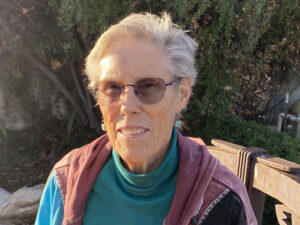
About the Author:
Nancy Marshall is the award-winning author of both a children’s book, A Rattler’s Tale (2021), and an award from NFPW for children’s fiction, 2022, and for A Dry Hate (2023), after First Place for fiction from NFPW (2024) and First Place for fiction, Arizona Authors Association (2024)
Marshall was born in New York, graduated from Smith College (MA), earned a master’s in teaching from Wesleyan (CT), and obtained her law degree from Rutgers University (Newark, NJ). She spent several years teaching high school history and political science and also served as a field officer with the New York State Division of Civil Rights.
Upon completing her JD at Rutgers University (Newark, NJ), Marshall moved to Arizona, where she served for almost five years as Executive Director of the Arizona Civil Liberties Union.
Find over 80 book reviews on my website under the “Library” tab. I’d love to hear your thoughts on the newsletter, my reviews, and what you’re reading—your insights could inspire future columns and may be featured in the next edition. Reach me at Mark@MillionMileWalker.com, MillionMileWalker.com, or facebook.com/millionmilewalker. Sign up for the Million Mile Walker Dispatch, a monthly review of my latest articles, book reviews, cultural insights, favorite quotes, and the occasional surprise